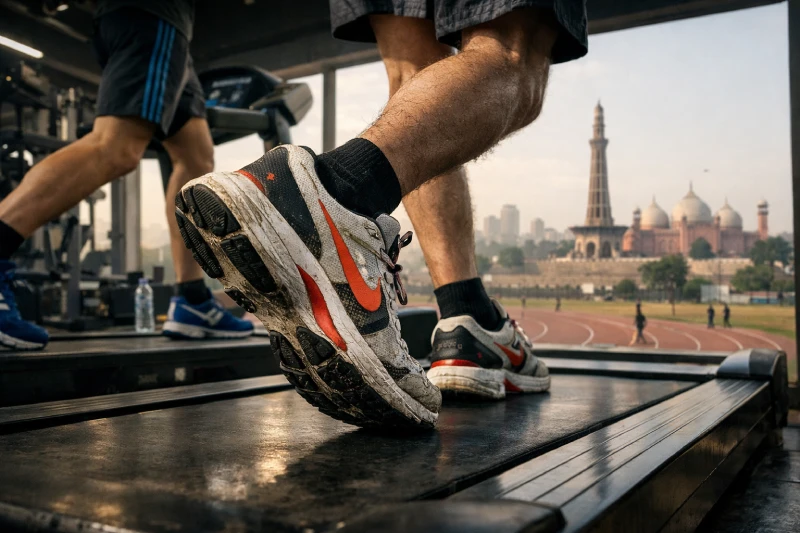
Walk into a mall in Lahore, Karachi or Islamabad and check the price tags on branded running shoes. Some premium models can cost PKR 40,000–50,000 or more. For many buyers, paying that much for a pair of shoes simply isn’t practical. Add rising living costs to the mix, and quality branded footwear can feel out of reach.
So most of us end up choosing between three things. Save for months and buy new. Buy a cheap local copy and hope for the best. Or look at branded second hand shoes in Pakistan, the pairs that were made by Nike, Adidas, ASICS or Mizuno, worn lightly, cleaned and sold again at a fraction of the original price.
All three can work in some situation. But if you train three or four days a week, only one of them usually makes sense. This guide explains why, which brands suit which workout, how to check a used pair before you pay, and the cases where you should honestly skip second hand and buy new.
The word “lunda” and why it is losing its grip
Let’s deal with the elephant first. For a long time, second hand in Pakistan meant lunda, and lunda meant cheap, worn out and something to be a little embarrassed about. That image came from the old landa bazaars where you dug through a pile and hoped for luck.
Buying preloved branded shoes in Pakistan online is a different thing. A pair of Nike runners that someone wore ten times is not a pile-of-clothes find. It is a well-built shoe that has barely started its life. Pakistan has been one of the biggest importers of used clothing in the world for years, and the people buying today are students, office workers and gym-goers who simply refuse to pay retail for something they can get at a third of the cost. Nobody at the gym can tell, and nobody should care. What your feet feel on a treadmill matters far more than whether the box was opened before.
Why the shoe matters more than you think
Every running step puts roughly two to three times your body weight through your leg. On concrete roads or a hard gym floor, that force goes from the heel straight into the knee and hip. A badly built shoe will not hurt on day one. It shows up weeks later as sore shins, a tight knee on the stairs, or a lower back that complains after leg day. Healthline’s guidance on choosing athletic footwear makes the same point: the right shoe for your activity lowers the strain on your joints.
Brands like Nike and Mizuno spend years developing midsole foam, heel structure and outsole rubber. A good second hand pair gives you that engineering without the retail price. The Nike Lunar Apparent is a good example: a properly cushioned road runner that many people would never pay full price for.
There is one more thing buyers forget. A decent running shoe is built to last somewhere around 500 to 800 km, depending on the shoe and the runner. If the previous owner wore a pair ten or fifteen times, almost all of that life is still ahead of you. That is why we only hand-pick pairs in 9/10 condition: clean uppers, sharp tread and midsoles that still feel responsive underfoot.
Original Used Shoes vs. Replicas: What Should You Choose?
Many people consider “master copy” shoes because they appear more affordable than original branded footwear. However, a similar appearance does not necessarily mean the materials, construction or performance will be the same.
Original shoes from brands such as Nike use specific materials and technologies designed for particular purposes. For example, Nike explains its footwear innovations on its official innovation pages. Replica shoes may look similar, but their quality and performance can vary depending on how they are made.
| Feature | Original Used Shoes | Replica or Master Copy |
|---|---|---|
| Cushioning | Original cushioning technology, with performance depending on wear and condition | Materials and cushioning may differ from the original |
| Weight | Depends on the model and its current condition | Can differ from the original model |
| Grip | Depends on the outsole design and remaining tread | Grip and rubber quality may vary |
| Breathability | Depends on the original upper materials and their condition | Materials may differ from the original |
| Glue and stitching | Inspect for separation, loose stitching and signs of wear | Construction quality can vary |
| Value | Can offer good value when authentic and in good condition | Lower upfront cost does not always mean better long-term value |
For example, a used Nike Air Vapormax Flyknit may be worth considering if it is authentic and its Air unit, upper and outsole remain in good condition. You can also explore available styles in our Nike shoes collection.
Before buying preloved branded shoes, check the outsole, cushioning, upper material, stitching and overall wear. Comfort and durability depend on the specific pair, how much it has been used and how it fits your feet.
Not sure how to identify an original pair? Read our original vs. master copy authentication guide for practical checks before you buy.
Which brand is good for what
Not every famous brand suits every foot or every workout. This is a quick, honest guide to what each one is known for, so you can narrow down before you start scrolling.
| Brand | Known for | Good for |
|---|---|---|
| Nike | Responsive cushioning, wide range from Pegasus-style trainers to Air models | Road running, general gym, daily wear |
| Adidas | Boost cushioning in the Ultraboost line, soft and bouncy | Easy runs, walking, casual use |
| ASICS | Gel cushioning and a strong focus on stability | Longer distances, runners who need support |
| Mizuno | Wave plate for a firm, controlled ride | Road running, volleyball and court shoes |
| Brooks | Makes running shoes only, with balanced cushioning | Regular runners who want reliability |
| Hoka | Very thick, soft midsoles | Joint comfort, long walks, long days on your feet |
| Skechers | Light, easy-going comfort in the GoWalk range | Walking and light gym sessions |
| Li-Ning and Peak | Good performance at a lower used price | Budget runners and court players |
If you are not sure where to start, begin with Nike or ASICS in your size and a neutral cushioned shoe. You can always get more specific once you know how your feet respond.
Which shoe for which workout
Using one pair for everything is the most common mistake we see.
Road running. You want a cushioned midsole, a flexible forefoot and a breathable upper. Lighter is better. Start with our running shoes collection.
Weight training. This is where people go wrong. A very soft running shoe makes squats and deadlifts feel unstable because your foot sinks into the foam. For lifting, a flatter and firmer sole is better.
HIIT and cross-training. You move sideways as much as forward, so you need lateral support. A shoe built only for straight-line running will let your ankle roll.
Court sports. Badminton, squash and basketball need grip and ankle support. Look at proper indoor court sneakers and not fashion trainers.
Padel and tennis. Padel has grown fast in Karachi and Lahore, and the shoe matters. You need a sole that grips the court surface and supports quick direction changes.
Football and cricket. Turf shoes and cricket shoes are designed around studs or spikes and specific grip. A running shoe on a cricket pitch is a slip waiting to happen.
Trekking and walking. Think grip and ankle support first, weight second. For long city walks, cushioning matters more than anything else.
If you mostly train in a gym, browse our gym shoes and compare similar pairs side by side.
How to check a used pair before you pay
Trust is the biggest problem with buying thrifted shoes online. Most people have heard of someone who ordered an “A-grade” pair and got something worn out. A good seller will show you all of the following without being asked.
1. The outsole. If the tread pattern is still sharp, like on these Li-Ning running shoes, there is plenty of life left. A smooth heel means the shoe has been worn a lot.
2. The midsole foam. Look for deep creases and cracks. Press it with your thumb if you can. Foam that feels hard or dead is finished, whatever the upper looks like.
3. The insole and heel lining. Heavy wear or holes inside show real usage. This is the part sellers like to hide.
4. Real photos of the exact pair. Stock images mean nothing. You want the sole, the heel, the inside and the size tag.
5. Honest grading and a clear return policy. At Shoegali, you can exchange a pair within 3 days if the size does not fit, with no restocking fee.
Condition grades are not the same everywhere, so always ask what a grade actually means before you pay. A seller who is happy to explain it, and to show you the sole and the inside of the shoe, is usually one you can trust.
Cleaning and hygiene: what actually happens to the shoe
The honest worry most buyers have is hygiene, and it is a fair one. Nobody wants to put their feet in a shoe that has not been cleaned properly.
Every pair we sell goes through a deep-cleaning process before it ships. If you are buying from anyone else, ask them the same question: how is the inside cleaned, and how is the shoe dried? A shoe that is only wiped on the outside is not clean. And rushing the drying, or putting it near a heater, is how shoes end up with a bad smell or damaged glue.
If you want to refresh a pair at home after it arrives, our guide on how to clean used shoes step by step walks you through it.
When you should not buy second hand
Most blogs skip this section, but it will save you money and build trust.
If you are training for a marathon or a serious race, buy new or very lightly used. At that level, foam fatigue matters and you want to know exactly how many kilometres are on the shoe.
Skip any pair with a cracked or flat midsole, even if the upper looks perfect. The upper is cosmetic. The midsole is where the shoe actually works.
Do not buy a shoe that does not fit just because the price is good. A great deal on the wrong size is wasted money. Sizes change between brands, so measure your foot in centimetres and compare it with the size chart instead of trusting the number on the box.
And walk away from any seller who will not show you the sole.
Sizing: how to avoid the most common mistake
Most returns in online shoe buying come down to size. Measure your foot in the evening, when it is slightly larger. Stand on a sheet of paper, mark the heel and the longest toe, and measure the distance in centimetres. Then compare it with the size chart for that exact brand and model.
Running shoes should have around a thumb’s width of space in front of your longest toe, because your foot swells and moves forward as you run. Gym shoes for lifting can be a little more snug. If you are between sizes, go up for running and stay true for lifting.
Making shoes last in Pakistani weather
Heat and humidity are hard on shoes, and crowded local gyms are no kinder. A few simple habits go a long way.
Let your shoes air out after every session, away from direct sun and heaters, because heat weakens both the glue and the foam. Never put them in a washing machine. A soft brush, mild soap and water are enough. If you can, alternate between two pairs so the foam has time to recover between workouts. And use each pair for its purpose, so no football in running shoes and no lifting in soft cushioned trainers.
During summer, remove the insole after a sweaty workout so it dries properly. This alone prevents most bad smells.
Is it actually cheaper?
A cheap replica looks like the budget choice, but if it falls apart in a few months, you may end up paying twice. A good preloved original can offer better value for money than a low-quality copy, especially when you choose a pair in good condition.
Take Nike Air Force 1 sneakers as one example. Official retail prices vary by model and market, with some versions costing significantly more than others. At Shoegali, preloved branded shoes are available for PKR 2,500–5,000, depending on the brand, model and condition. This gives budget-conscious buyers a more affordable way to explore branded footwear.
The same value applies across other popular brands, including Adidas, ASICS and Mizuno. You can explore different brands and styles at more affordable prices while choosing a pair that suits your budget and needs. Just make sure to check authenticity, overall condition and fit before buying.
Ultimately, the best value comes from choosing a pair that fits well, is in good condition and meets your everyday needs. Preloved branded shoes can help you enjoy quality footwear while keeping more money in your pocket.
Frequently Asked Questions
Are second-hand shoes hygienic?
Second-hand shoes can be hygienic when they are properly cleaned and sanitised. Before buying, ask the seller about their cleaning process. At Shoegali, we clean and sanitise every pair before dispatch. Read our safety and hygiene guide to learn more.
How can I tell if branded shoes are original?
Check details such as stitching, insole printing, the size label and overall construction. Ask the seller for clear photos of the actual pair and any available authenticity information. Our original vs. master copy authentication guide explains what to look for.
Are running shoes or training shoes better for the gym?
Running shoes are generally designed for running and cardio activities, while training shoes often provide a more stable base for gym workouts and weightlifting. Choose footwear according to your main activity and comfort needs.
How long do used branded shoes last?
The lifespan of preloved branded shoes depends on their condition, previous use and how often you wear them. Check the outsole, cushioning, stitching and upper material before buying. A well-maintained pair may continue to serve you well.
Which shoe brand is best for beginners?
Nike, ASICS and Adidas offer a variety of options for beginners. The best brand depends on your activity, foot shape, fit and budget. Compare individual models rather than choosing a shoe based on brand name alone.
Can I exchange shoes if the size does not fit?
Shoegali offers a size exchange within three days, with no restocking fee. Measure your foot in centimetres before ordering, and check the applicable exchange conditions before purchasing.
Can I wear second-hand shoes every day?
Yes, provided the shoes fit properly and are in suitable condition. Check for worn-out cushioning, damaged soles and loose stitching. Rotating between two pairs may also give each pair time to air out between wears.
Final Thoughts
Preloved branded shoes can be a practical choice for gym-goers, casual runners and everyday wearers, provided you check the condition and buy from a seller who shows you the exact pair. You can enjoy well-known brands at more affordable prices without paying the full retail cost of a new pair. Just make sure the shoes fit comfortably and are suitable for your intended use.
Ready to find your next pair? Browse our latest arrivals or visit our homepage to explore all available categories.